Immersive
Learn by being there
Stand inside the solar system, walk through a cell, hold a market in your hands. Abstract ideas become places you can explore.
VR learning platform · early access
HAL is a VR classroom with an agentic teacher. It learns how each student learns, and every lesson after that is shaped by it.
The problem
A teacher can teach at only one level and one pace. Students who start behind can't follow, and students who are ahead learn less than they could. Teaching to the middle costs learning at both ends.
Starting behind isn't the same as learning slowly. A capable student who begins in the wrong place keeps falling further behind, because every lesson builds on the one they missed.
Both groups sit in the same classrooms, taught one lesson at one pace.
HAL's goal: the gains of individual instruction, without one teacher or tutor per student.
Why HAL
Software can do this job: in a review of tutoring studies, step-based computer tutors came close to human tutors, and in a randomized trial an adaptive system beat expert teacher-led instruction in math. What matters is what the software remembers and what it changes.
AI chat tutors
Free from every major AI company. They explain well when asked, but they don't keep a model of the learner or change the course.
Adaptive practice software
Tracks mastery skill by skill and picks the next exercise. The leading example runs as tablet practice in learning centers, starting with young children.
HAL
Keeps a model of each learner across sessions, changes the lesson itself, and checks that it worked, inside an immersive VR lesson with an agentic teacher.
Sources: VanLehn, Educational Psychologist, 2011 · Wang et al., Interactive Learning Environments, 2020
Inside HAL
Illustration of a lesson space. Real in-headset footage will replace it.
Immersive
Stand inside the solar system, walk through a cell, hold a market in your hands. Abstract ideas become places you can explore.
Adaptive
Every lesson is generated for one student. HAL slows down, speeds up, or explains it another way, the moment it's needed.
Continuous
Every answer, hesitation and spoken explanation sharpens HAL's model of how each student learns, so the next lesson fits even better.
How it works
real time
Every answer updates what HAL knows about the student, and the next step changes on the spot.
periodic
Over weeks, HAL rebuilds the path through the course around how this student actually learns.
No one else's curriculum changes.
The signal
AI can write any cover letter, and a GPA means something different at every school. HAL sees how students actually learn: how fast they master new material, what they still remember a week later, how they handle hard problems and explain their thinking.
That becomes a capability profile that students own and can choose to share with employers, universities and programs that need a better signal.
based on observed learning sessions · shared by the student
Roadmap
The learner model and lesson loop, tested on simulated learners against a fixed curriculum.
Lessons in the headset, with an agentic teacher and the same adaptive engine behind them.
Early testers, then a pilot that measures what learners still know a week later.
Learning data becomes a profile students own and share.
Team
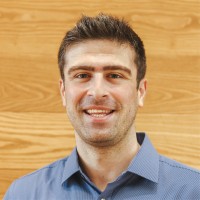
Co-founder · [Title]
Background in information systems, business and marketing. Leads HAL's data architecture, the learning record behind the capability profile, and go-to-market.
Co-founder · [Title]
Background in signal processing and optimal control. Leads HAL's learner model: estimating what each student knows and deciding what they should learn next.
Contact
We're talking with accelerators, investors and early partners.
hello@halxr.com